The World Abaza Congress, together with the Drama Theater, reopened its Discussion Club. The first meeting of the "Theater and Audience" project took place right after the performance of Chekhov's "The Seagull." The audience discussed the production, shared impressions, and reflected on its meaning.
Esma Golandziia
The evening began with a performance of "The Seagull," one of Chekhov's iconic plays. The audience enjoyed an interpretation of the work, directed by Honored Artist of Abkhazia Madina Argun. The performance featured Tamara Avidzba, Mikhail Tskua, Gunda Azhiba, Maya Dzhikirba, Khibla Mukba, and other actors from the troupe.Following the performance, a discussion took place between the audience and the actors. Those present included experienced theater connoisseurs and those watching the play for the first time. The discussion was opened by the theater's general director and actress Khibla Mukba.
"We want you to share your impressions. If there are any flaws or comments, we want them to be voiced. Such meetings, where there is live interaction with the audience, are very important."
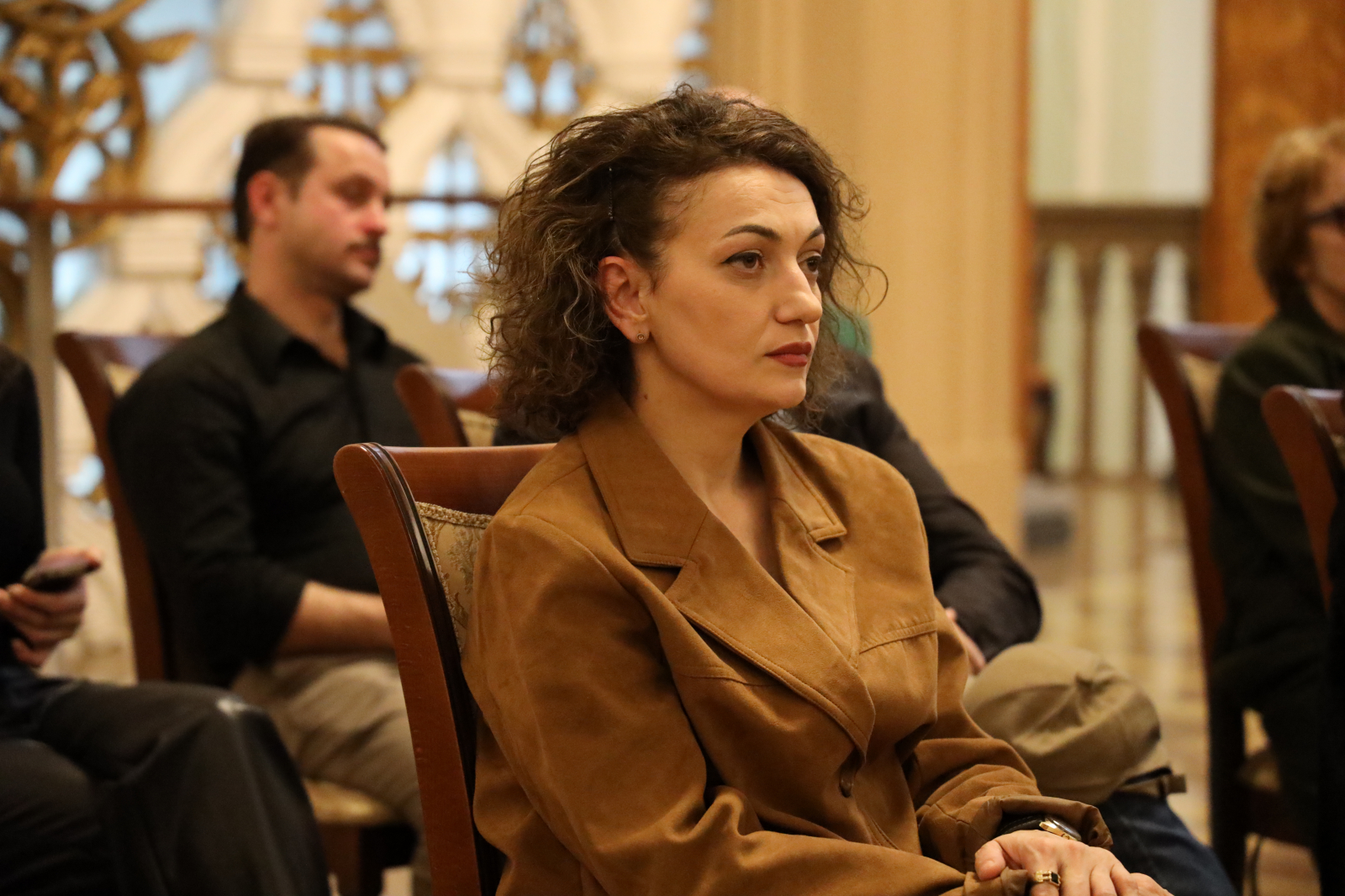
Director Madina Argun also emphasized the importance of feedbacks.
"There is a problem with theater criticism in Abkhazia. Sometimes, when a director emphasizes a particular scene, the audience's reaction can be unexpected. I'd like to understand whether the clues I've laid out are being understood and what I need to work on next. This is important for us – and for me personally, despite my experience."
For over a hundred years, "The Seagull" has been performed in leading theaters, continually receiving new interpretations. Audience member Elena Kobakhia noted the uniqueness of the Abkhazian production and thanked the director and actors for their work.
"You know what's most precious? It's the process of recognition, when you realize you're on the same wavelength with the director, his ideas, and you understand his characters. In this recognition lies the joy of discovery. Any reputable theater strives to stage Chekhov, to try to understand him, to interpret him. Thank you for this new interpretation!" she noted.
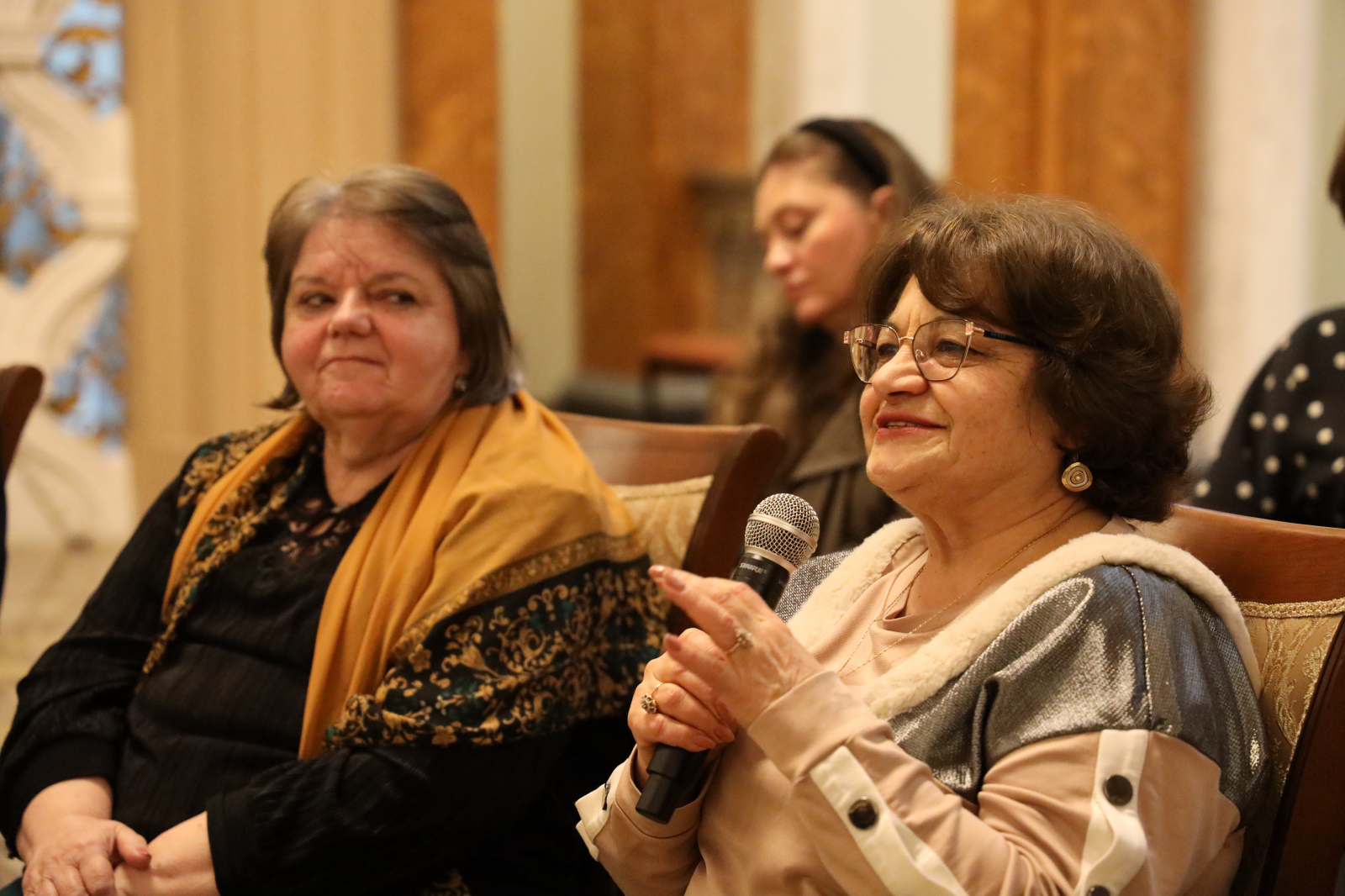
During the discussion, the audience asked the director about the meaning of various symbols in the play. Some admitted they had a new perspective on the play – its content proved to be deeper and more complex than they had imagined.
"I probably didn't solve all the clues, but the play itself, despite its tragic nature, made me think about life, love, and the bright side. We must appreciate this. In general, to discuss art, we need to visit drama theaters and other theaters and read the classics," Alkhas Manargiia noted.
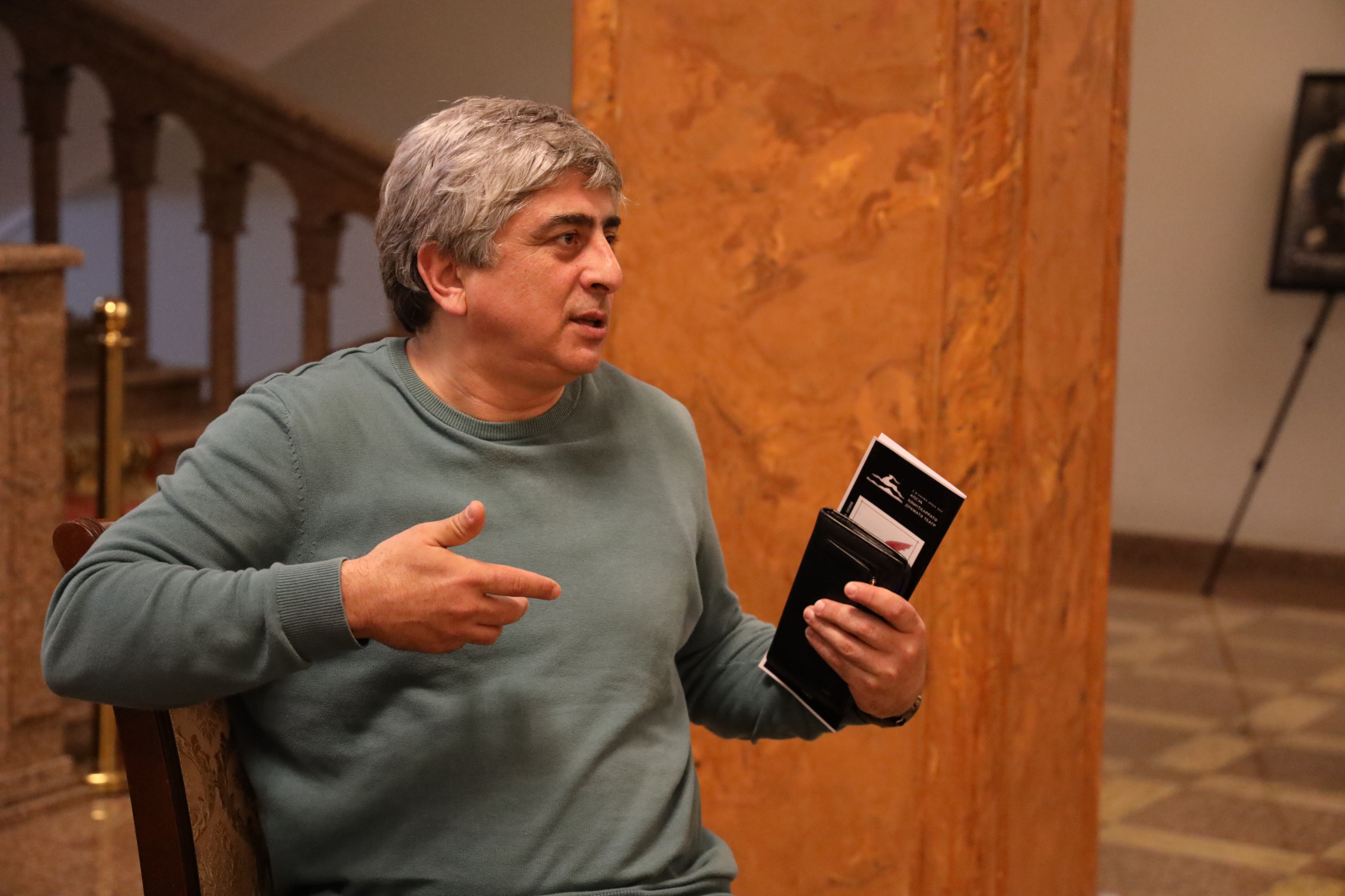
Aida Ladariia, a viewer, shared her detailed impressions of the production.
"The actors were sincere and devoted themselves to their roles. But I think, Madina, you went a bit overboard with the symbolism. I caught myself wondering, 'What did Madina mean by this, what does it mean?' But on the other hand, I thought – perhaps this connection between the director's vision and the audience's perception is what makes theater magic. And I know you're a searching director, and I felt your search in this performance," she emphasized.
Audience members also noted the participation of young actors in the play, the expressive musical accompaniment, and the confession of love scene in Abkhaz.
"This confession has a special technique. First, the woman falls at his feet, and then she turns and seems to let go, but in reality, she doesn't let go – she keeps everything under control: her feelings, her pain. It's a masterpiece," said Astanda Argun.
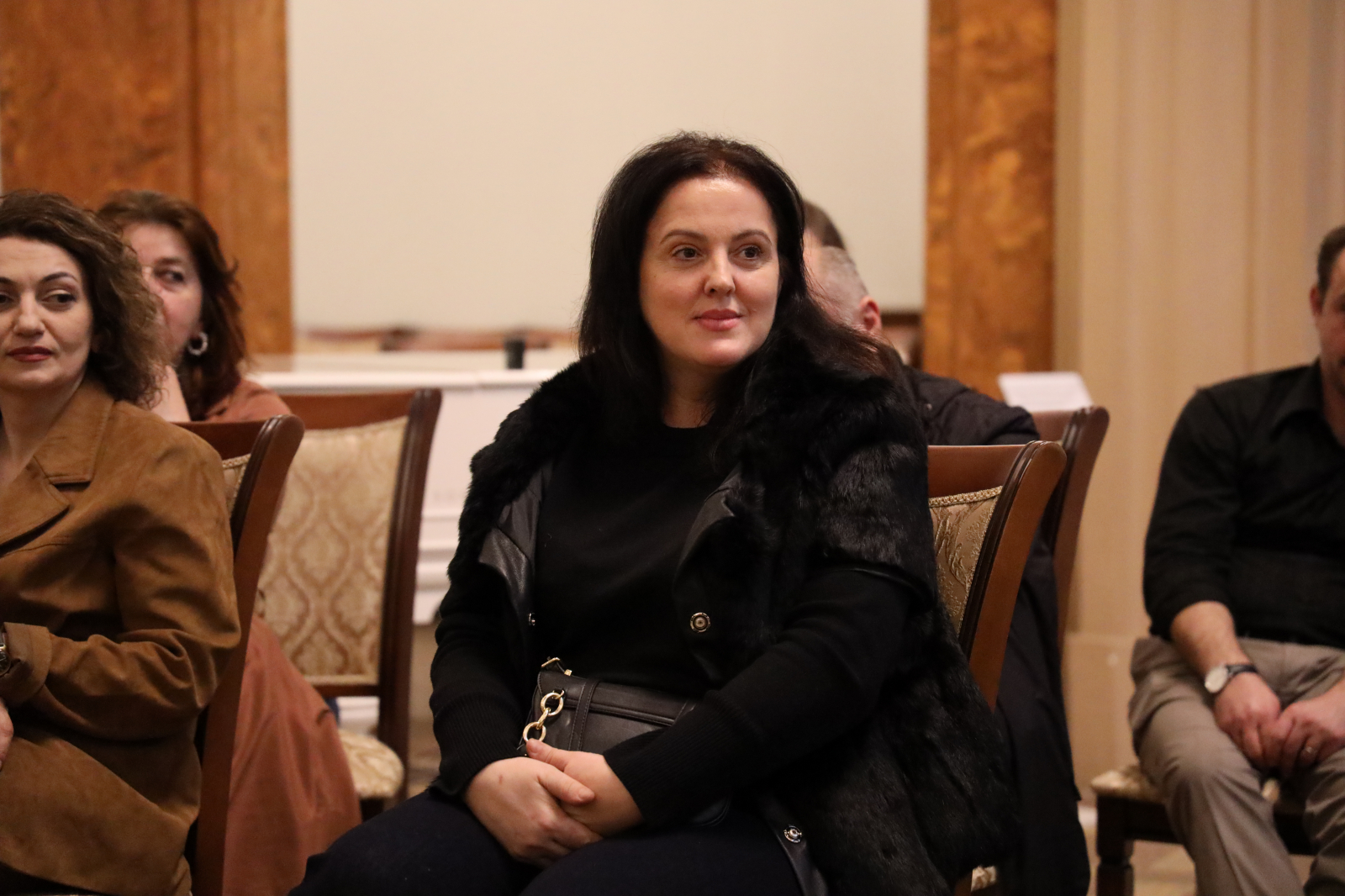
The audience disagreed on the performance, but they all agreed on one key point: it deeply touched them and made them think. The questions about the meaning of life and love that the production raised were relatable and understandable to everyone.
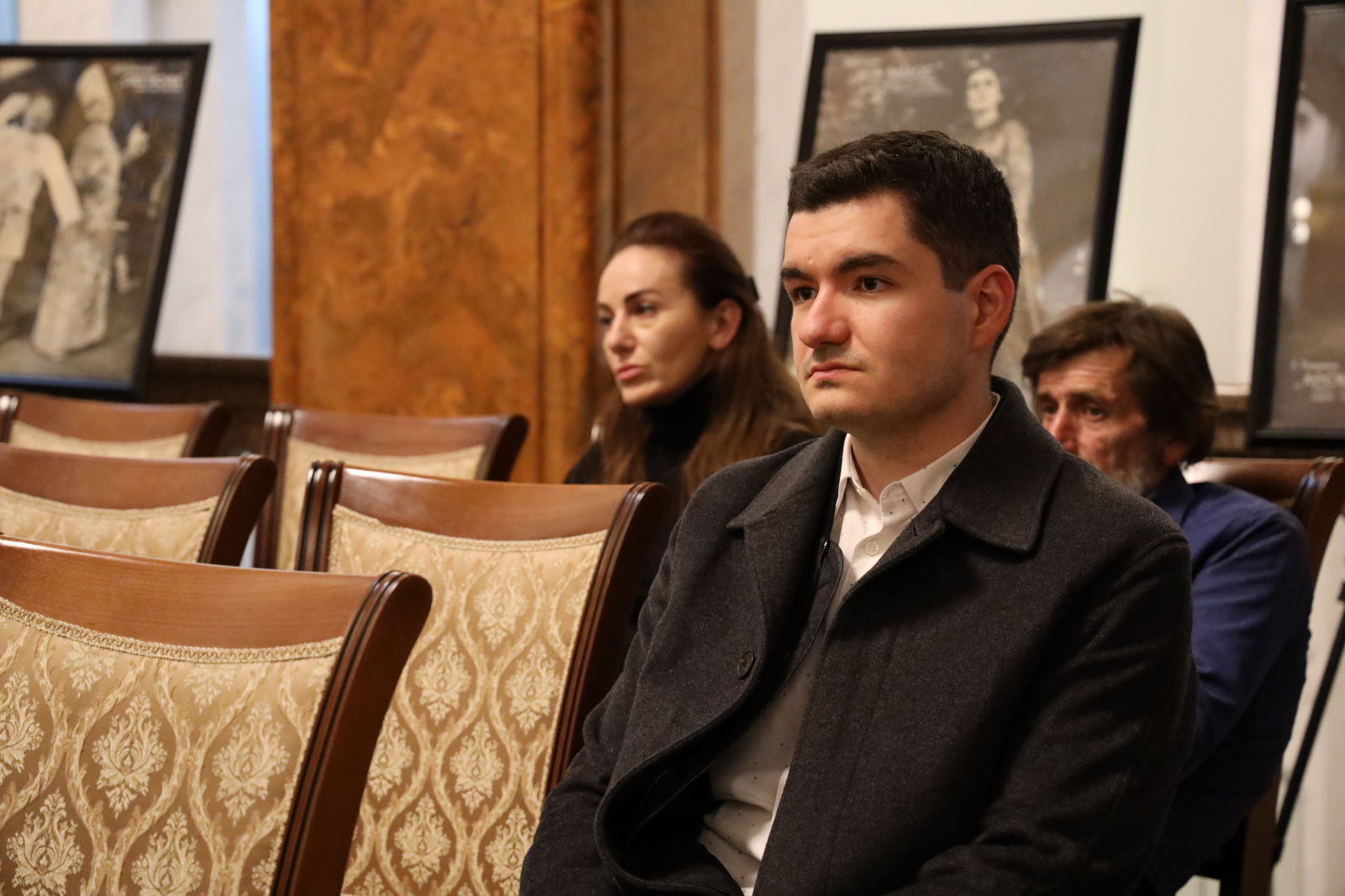
At the end of the meeting, Izolda Khagba, head of the OSAZ WAC and project curator, thanked the theater and actors for their collaboration.
"Today is our pilot meeting, and, of course, we are going to invite more young people to the discussions. I plan to attract more students from various departments, particularly journalism students: it will be useful for their careers to learn how to discuss a performance, hear different opinions, and understand the directors' intentions, so that their reports are more insightful and interesting, and the audience, after watching them, wants to come to the theater. It is precisely at such meetings that taste and perseverance are formed."
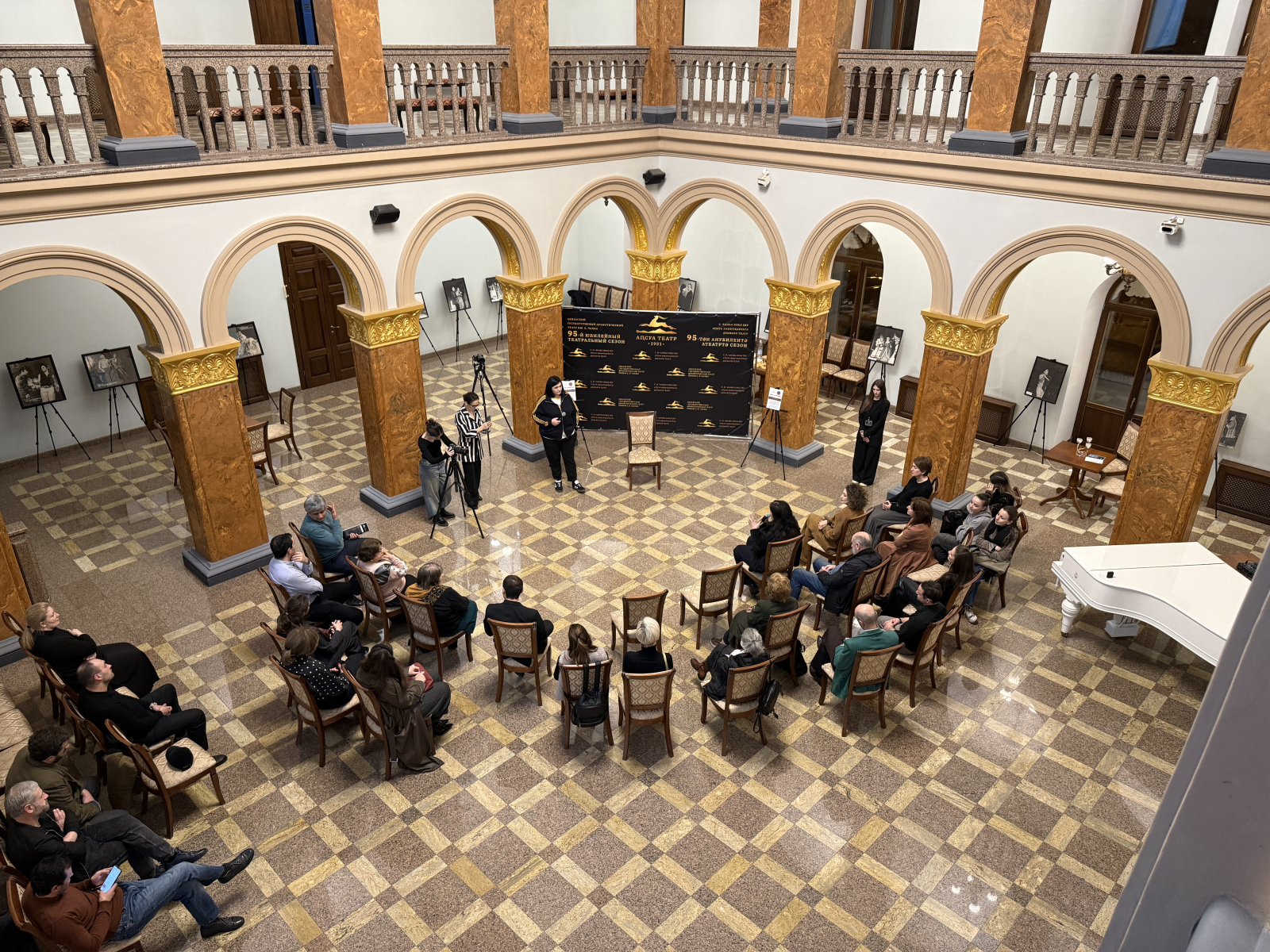
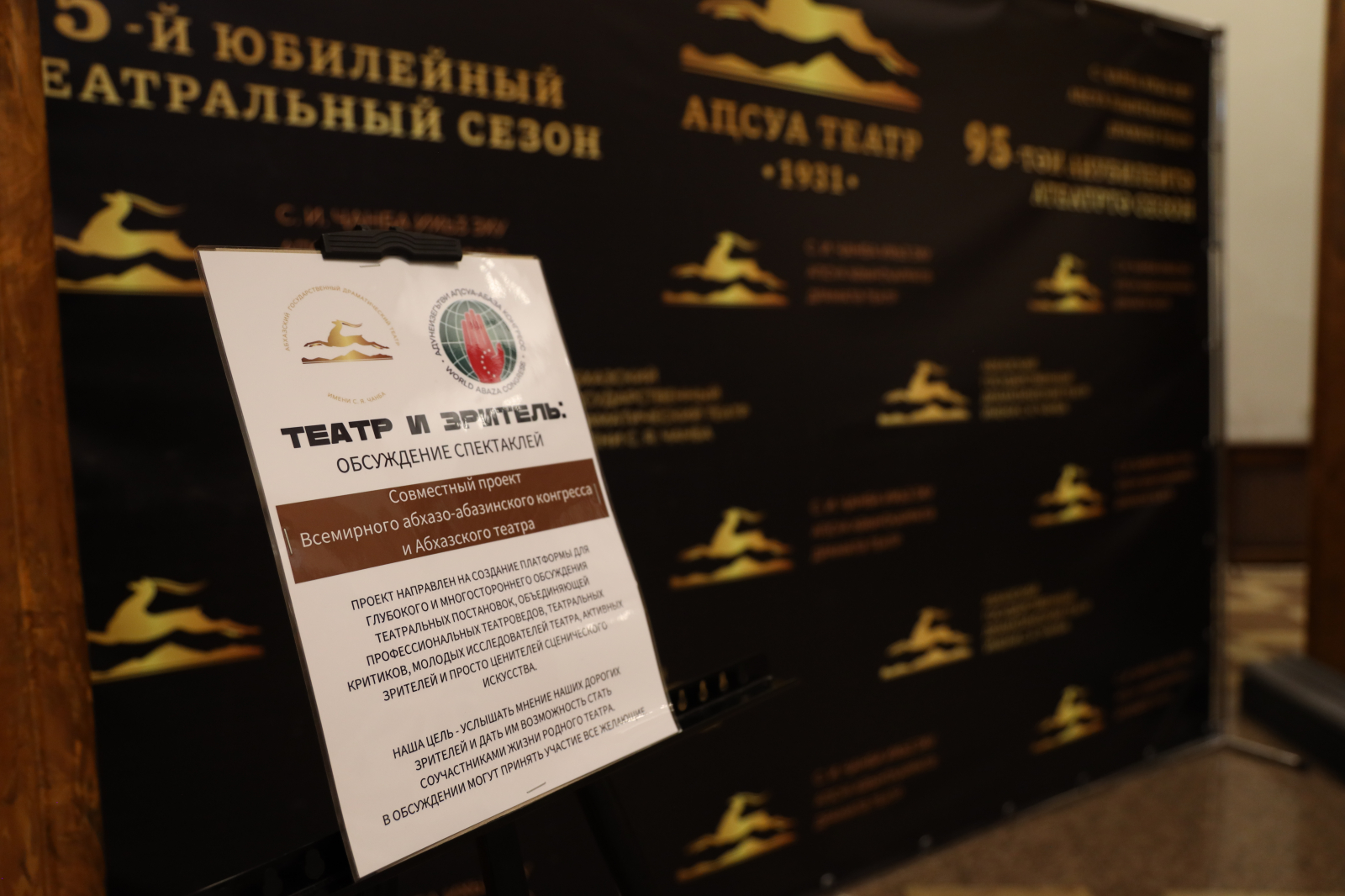
This joint project between the World Abaza Congress and the Abkhazian Theatre aims to create a platform for in-depth and multifaceted discussion of productions. The project brings together professional theatre scholars, theatre critics, young theatre researchers, active audience members, and simply lovers of the performing arts. Anyone can take part in the discussions.